
What if Your AI Could Connect to Any Tool Instantly?
You have probably watched your AI assistant stumble when it needs to interact with the outside world. You want it to check a database, browse a website, or pull data from your company API. Instead, you hit a wall of custom code, broken plugins, and endless configuration headaches.
Here is the thing. That frustration is about to become ancient history.
In late 2024, Anthropic quietly released something that is now reshaping how AI agents interact with the digital world. They called it the Model Context Protocol, or MCP for short. And then they did something radical: they open-sourced it.
Why MCP Feels Like Plugging in a USB-C Cable
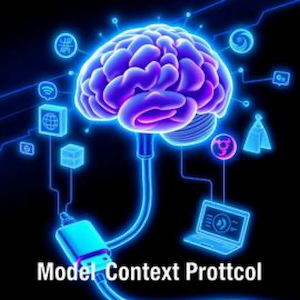
Picture this. You have a drawer full of chargers. chaotic. messy. one for your phone, another for your laptop, another for your headphones. Then USB-C arrived and suddenly everything just… worked.
MCP is effectively a USB-C port for AI agents.
It uses a server-client architecture where an MCP server exposes tools, resources, and prompts that any compatible AI agent can discover and call. No more writing custom glue code for every integration. No more praying that your API wrapper still works after an update.
Developers are voting with their stars. The official MCP Python SDK has already accumulated over 23,000 GitHub stars. The reference servers repository sits at a staggering 86,000 stars. These numbers indicate massive developer adoption, and they tell the same story: people are tired of reinventing the integration wheel.
The Browser Breakthrough You Did Not See Coming
Not all tools are created equal. Some integrations matter more than others.
MCP-B is a specialized variant focused on browser automation for AI agents. When it appeared on Hacker News, it scored 336 points and generated 184 comments. Developers were hungry for this. They could see what MCP-B meant: AI agents that could actually navigate the web like humans do, without brittle scripts or phantom breakage.
Imagine an agent that books your flights, fills out forms, or pulls data from legacy web portals. MCP-B makes this reliable enough to deploy in production.
The Moment Anthropic Removed the Handcuffs
Proprietary protocols die slow deaths. Remember when every tech giant tried to lock you into their ecosystem with custom formats and hidden APIs? Anthropic saw that trap and refused to walk into it.
December 9 2025, they donated MCP governance to the Agentic AI Foundation. This was not a press stunt. It was a structural move to prevent vendor lock-in and ensure open stewardship. Now MCP belongs to the community. No single company controls its future.
This is the kind of decision that separates infrastructure from products. Products get sunset. Infrastructure gets adopted.
OpenClaw Agents Discover Tools on the Fly
Let me show you what this looks like in practice.
OpenClaw AI agents benefit from MCP because they can dynamically discover and use tools without hardcoded integrations. File operations? The agent finds the file system MCP server. Web browsing? It connects to a browser automation tool. API calls? The agent discovers the right endpoint and starts working.
You are not writing integration code. You are describing what you want done, and the agent assembles the toolchain in real time.
This changes everything about how you build AI workflows. Instead of maintaining a fragile stack of dependencies, you declare intents and let the protocol handle the plumbing.
MCP vs A2A: Knowing Which Tool Does What
You might have heard of A2A, or Agent2Agent protocol. These two technologies sound similar, but they serve different purposes.
Think of it this way. MCP connects agents to tools. A2A connects agents to each other. Both are complementary. You need MCP so your agent can read your calendar, browse the web, or query your database. You need A2A so your scheduling agent can negotiate with your travel agent.
One handles the hand. The other handles the handshake.
The Enterprise Wake-Up Call
Large organizations move slowly for a reason. They have decades of legacy systems, scattered data silos, and compliance requirements that make integration projects nightmares.
Enterprise adoption of MCP is accelerating because it reduces integration overhead and lets companies expose their internal tools to AI agents with a uniform API. Instead of building custom connectors for every department’s tech stack, they implement MCP servers once. Procurement tools. HR systems. Financial databases. All speak the same protocol now.
The cost savings are not theoretical. They are immediate.
The Security Reality Check You Cannot Ignore
New protocols bring new risks. Security concerns around MCP are growing, and smart developers are paying attention.
OWASP released an MCP Top security framework, identifying the ways these integrations can be exploited. Tools like MCP-Scan are emerging to audit MCP servers for vulnerabilities before they go live.
You need to treat MCP servers like any other piece of infrastructure. They need hardening. They need monitoring. The good news is that the security community is engaging early, building tools and standards before problems become pandemic.
Why Self-Hosting Changes the Power Dynamic
Cloud APIs are convenient until they are not. Rate limits kick in at midnight during a critical deployment. Pricing changes with thirty days notice. Your data sits on someone else’s computer.
Self-hosted MCP servers let developers keep control of their data while still enabling powerful agent workflows. This aligns with the open-source ethos that made MCP possible in the first place.
You can run these servers on a VPS from providers like Contabo or Hostinger. This ensures data privacy and avoids reliance on cloud API rate limits. Your agents keep running even when third-party services hiccup.
The rise of MCP is driving demand for AI-ready hosting infrastructure that supports persistent server processes and secure API endpoints. Hosting providers are noticing. They are building packages specifically for MCP deployment because they see what is coming.
Your Move: Build on Infrastructure That Lasts
The history of technology is the history of standards. TCP/IP. HTTP. USB. Each one eliminated friction and unlocked creativity.
MCP is joining that list. It is not a product release. It is a protocol that is being adopted because it solves real problems for real developers.
You have a choice. You can keep building brittle custom integrations that break every quarter. Or you can plug into a standard that is already supported by tens of thousands of developers and backed by a foundation that answers to no single vendor.
The USB-C moment for AI agents is here.